



Program Overview
Applications
- Orchards
- Vineyards
- Dry Land Crops
- Irrigated Crops
Your Profitability Is Our Success
For decades, conventional farming has relied on the same approach: more pesticides, more fertilizer, more of the same. But today, those methods are delivering diminishing returns. Each year, inputs become less effective, costs climb higher, and climate change increases the pressure on food security.
The truth is in the details. Yields may be rising, but much of that success is due to improved crop genetics—not better management. Fertility recommendations based only on nutrient removal rates often benefit fertilizer companies more than growers. And with fewer than 25% of farms soil testing annually, many are applying fertilizer blindly—despite knowing that efficiency is often no better than 30%. Even when tests are done, they usually focus only on chemistry, ignoring the biological and physical aspects of soil health. Add in “best practice” guidelines shaped by vested interests, and it’s no wonder many farmers feel the system is broken.
The Profitability Challenge
Farmers today face the greatest profitability pressures since the 1930s: input costs are rising, commodity prices remain under downward pressure, and margins are getting squeezed. The farmers who succeed will either scale up massively to leverage economies of scale—or diversify with smarter, more sustainable practices.
Our Approach: A Balanced Path Forward
At Crop Growth Sciences, we combine proven agronomic practices with modern innovations to create practical, whole-system solutions. Our strategies integrate soil biology, nutrient use efficiency, and sustainable inputs to maximize profitability without sacrificing long-term soil health.
Think of crops like engines: a tractor needs water, fuel, oil, and spark in balance to run smoothly. Likewise, plants require the right balance of water infiltration, gas exchange, sunlight, carbon, and minerals. Too much or too little of any factor limits growth. Flooding seedlings with nitrogen is like flooding an engine—too much, too soon. Over-tillage is like using thin oil that burns up quickly, draining carbon from the soil. Exclusive reliance on synthetic fertilizer is like running an engine only on premium fuel—it might work in the short term, but it reduces longevity.
When everything is tuned correctly, both engines and crops perform at their best. Our job is to help farmers fine-tune the system—doing the right thing, at the right time—to achieve lasting profitability.
What to Expect
Don’t Throw Out the Baby With the Bathwater
Soluble fertilizers, when applied at high rates, disrupt soil microbes and limit their ability to colonize plant roots. This matters because strong microbial colonization helps plants resist drought and disease, while also building soil structure that improves water infiltration and gas exchange. The solution isn’t to abandon fertilizers entirely, but to use them wisely—limiting excess soluble fertilizers in the soil.
Smarter Nutrition Above Ground
When in-season deficiencies appear, organically chelated or complexed synthetic fertilizers applied to leaves can correct them far more efficiently than many purely organic mineral forms. By using efficient chemistry in the right way, we can address crop needs without overloading the soil.
The Biological Method
At Crop Growth Sciences, we believe the future lies in combining the best of both worlds—traditional tools and modern biological insights. We call this The Biological Method, a system designed to grow productive crops today while building resilient soils for tomorrow.
This three-pronged approach works by:
Improving soil biology – enhancing the natural properties of the soil.
Farming microbes – encouraging beneficial organisms that unlock nutrients and outcompete disease.
Boosting processes – delivering the right nutrients, in the right place, at the right time to support biological efficiency.
Change Isn’t Easy—But It’s Worth It
Reimagining farming as not just growing crops, but also growing microbes, is the first step toward regenerative agriculture. By shifting from heavy reliance on chemicals to smarter use of minerals and biology, farmers can move toward healthier soils, stronger plants, and long-term profitability.
Visit our dedicated website to all things Agriculture for more information!

If you don’t succeed, we don’t succeed. We see our success as growing profits for farmers, not just crops. That’s why we’ll tell it to you straight and never recommend something that won’t make you money. A healthy partnership starts with trust:
- A review of your data and existing practices.
- A plan to work with what you have and integrate new soil conservation principles.
- Get you more out of what you put in.


Results
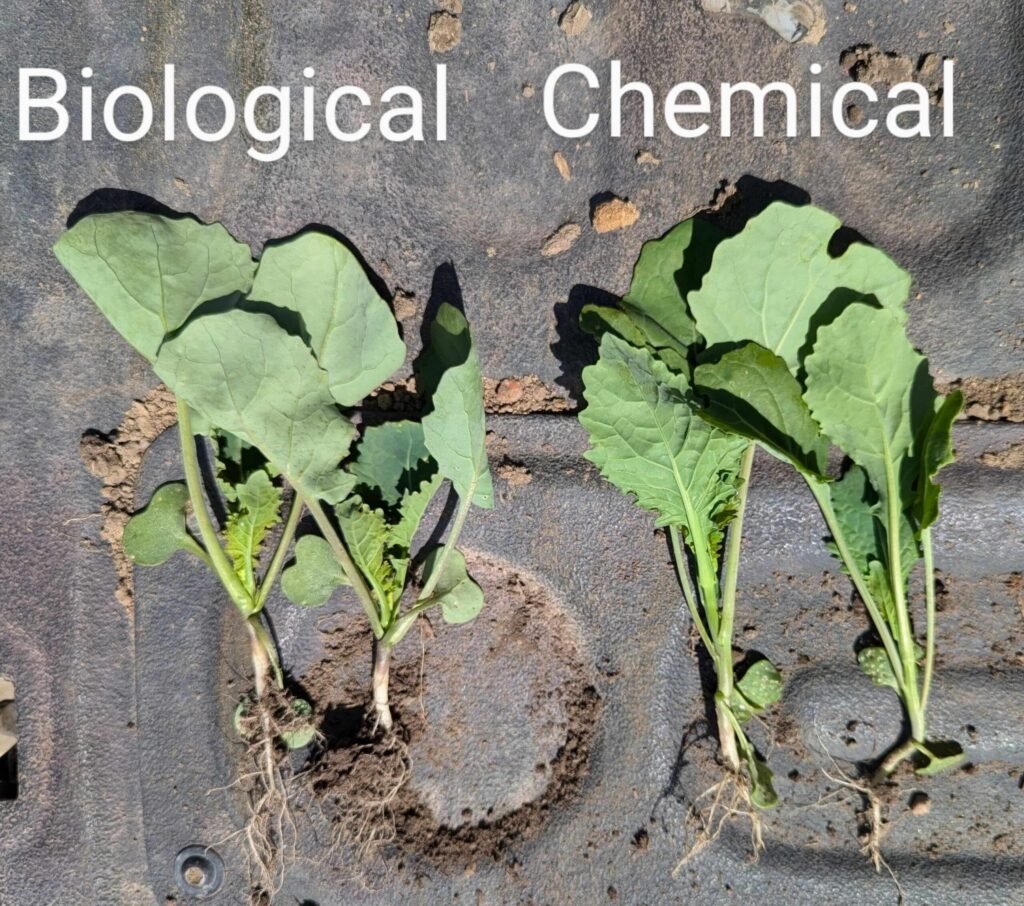
When grown in biologically managed soils, we get better plant structure leading to reduced lodging, better rooting, improved input efficiency, and increased grain quality.
40%
less synthetic inputs